Victorious Christian Living
Growing in Your Relationship with God
By David Boiarsky · November 3, 2026
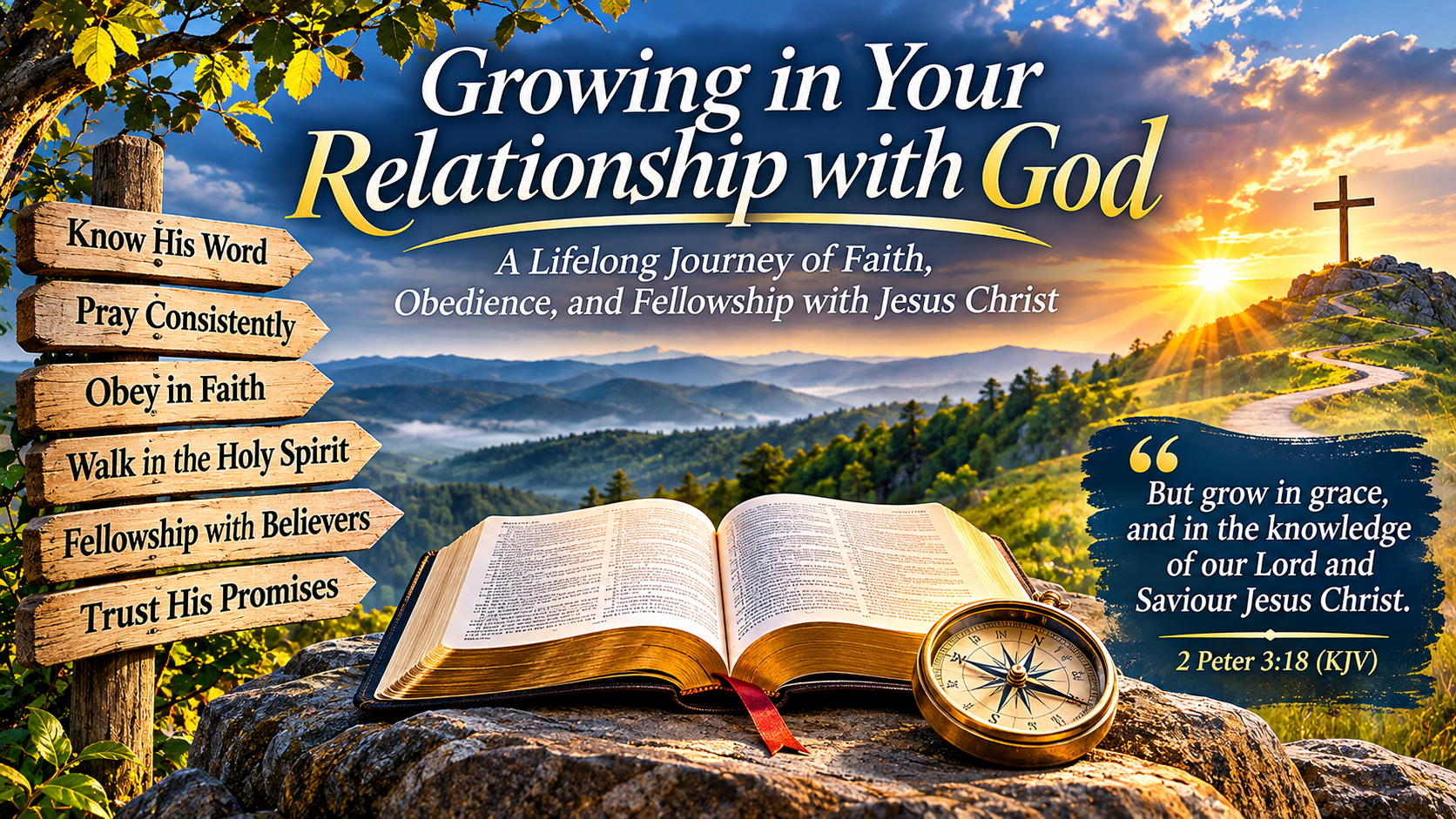
Welcome: God Has More for You
Your relationship with God was never intended to remain where it began. The moment you accepted Jesus Christ, you began a journey—not toward religious activity, but toward a deeper relationship with the living God. He doesn't simply want you to know about Him; He wants you to know Him, trust Him, walk with Him, and allow His Word to transform the way you live.
Perhaps you are new to Christianity and wondering where to begin. Maybe you've been a believer for many years, yet you recognize areas of your life where you need to grow. You may know what the Bible says, but struggle to consistently put it into practice. Wherever you find yourself today, understand this: God has not called you to remain spiritually stagnant.
Spiritual growth is not measured by how many sermons you hear, how many Scriptures you can quote, or how busy you are with religious activities. It is measured by a life increasingly shaped by the character, teachings, and example of Jesus Christ.
You were not saved merely to escape your past. You were saved to experience a new life in Christ.
Growth takes time. There will be victories, challenges, corrections, and seasons when your faith is tested. But through every season, God's grace remains sufficient. He is not asking you to become spiritually mature overnight. He is calling you to keep walking with Him, keep trusting His Word, and keep responding to His leading.
The goal of the Christian life is not simply to know more about Jesus, but to become more like Him.
But grow in grace, and in the knowledge of our Lord and Saviour Jesus Christ. To him be glory both now and for ever. Amen. — 2 Peter 3:18 (KJV)
Notice that Peter doesn't say we should simply attend more meetings, acquire more religious knowledge, or become more familiar with Christian terminology. He says, "Grow in grace, and in the knowledge of our Lord and Saviour Jesus Christ."
There is a difference between knowing about someone and actually knowing them. You can memorize facts about a person without ever developing a relationship with them. The same principle applies to our walk with God. We can become familiar with Scripture while failing to allow its truth to govern our lives.
Growing in grace means learning to live in the reality of God's undeserved favor. We cannot earn His love, purchase His forgiveness, or work our way into His acceptance. Salvation is God's gift through Jesus Christ. Yet the grace that saves us also teaches us to live differently.
Grace does not give us permission to remain unchanged. It gives us the foundation from which transformation takes place.
As we grow in the knowledge of Jesus, we discover more about His character, His promises, His authority, and His love. Our understanding should produce greater trust, deeper obedience, stronger faith, and a willingness to follow His example.
Spiritual maturity is not about making ourselves look impressive. It is about allowing Jesus to become increasingly evident in our lives.
1. Let God's Word Become Your Foundation
Thy word is a lamp unto my feet, and a light unto my path. — Psalm 119:105 (KJV)
You cannot build a strong Christian life on opinions, emotions, traditions, or what someone else tells you God has said. Your foundation must be the Word of God.
The Bible is not simply a religious book to be read when we need encouragement. It is God's written revelation that teaches us who He is, what He has done through Jesus Christ, and how He calls us to live.
A lamp does not necessarily illuminate the entire road ahead, but it gives enough light to take the next step. God's Word works that way in our lives. It gives us direction when we are uncertain, correction when we are wrong, encouragement when we are discouraged, and wisdom when we face difficult decisions.
Begin with a manageable reading plan. Spend time in the Gospels. Pay attention to the words and actions of Jesus. Ask yourself:
- What does this passage reveal about God? - What truth is being taught? - Is there something I need to change? - How can I apply this Scripture today?
Don't simply read to finish a chapter. Read to understand what God is communicating through His Word.
And remember, missing a day does not mean you've failed. Don't allow guilt to keep you from returning to Scripture. Pick it up again and continue.
A believer who consistently builds his life upon God's Word develops a foundation that circumstances cannot easily shake.
2. Develop a Real and Consistent Prayer Life
Trust in him at all times; ye people, pour out your heart before him: God is a refuge for us. Selah. — Psalm 62:8 (KJV)
Prayer is more than presenting God with a list of requests. It is an opportunity to develop fellowship with your Heavenly Father.
You don't have to impress God with religious language. He already knows your heart. You can come before Him honestly, expressing gratitude, confessing your failures, asking for wisdom, interceding for others, and bringing Him the concerns you carry.
Prayer should become part of your daily relationship with God, not simply an emergency response when something goes wrong.
Jesus demonstrated the importance of prayer throughout His earthly ministry. He made time to withdraw and commune with the Father. If prayer was important in the life of Jesus, how much more should we recognize its importance in our own lives?
There will be times when you don't understand what God is doing. There may be prayers that seem unanswered and circumstances that don't change as quickly as you desire. Don't confuse a delay with abandonment.
Continue to trust Him. Continue to pray. Continue to seek His wisdom.
Prayer does not give us control over God. It develops our dependence upon Him.
Make prayer personal. Talk with Him throughout the day. Thank Him for His goodness. Ask for direction before making important decisions. Pray for those who are hurting. When you recognize an area where you have fallen short, bring it honestly before Him.
The strength of your prayer life is not measured by the length of your prayers, but by the sincerity of your heart and your willingness to depend upon God.
3. Put God's Word Into Practice
But be ye doers of the word, and not hearers only, deceiving your own selves. — James 1:22 (KJV)
Here is where spiritual growth becomes visible.
It is possible to hear excellent preaching, study Scripture regularly, and accumulate years of biblical knowledge without allowing that knowledge to change our behavior.
James gives us a direct warning: Hearing the Word without responding to it can deceive us into thinking we are growing when we are not.
If the Word teaches us to forgive, we must be willing to forgive.
If it teaches us to walk in love, our words and actions should reflect that love.
If it teaches us to be honest, we must practice honesty even when dishonesty would be more convenient.
If it teaches us to trust God, we must learn to trust Him when circumstances challenge our confidence.
Obedience is not how we earn salvation. It is the response of a heart that has received God's grace.
Sometimes obedience requires a difficult decision. It may mean admitting we were wrong, asking someone to forgive us, changing an unhealthy pattern, or walking away from something that is pulling us away from God.
When you recognize an area of disobedience, don't make excuses. Confess it, receive God's mercy, and take the next step toward doing what is right.
Remember this: Knowing what God says and doing what God says are two different things.
The Word of God was never intended merely to inform your mind. It is meant to influence your heart and direct your life.
4. Grow Through Fellowship with Other Believers
God never intended the Christian life to be lived in isolation.
We need the encouragement, instruction, prayers, and accountability that come through healthy relationships with other believers.
A healthy local church provides opportunities to worship together, study Scripture, serve others, and develop meaningful Christian relationships.
Find a church where the Word of God is taught faithfully, where Jesus Christ is honored, and where spiritual leadership is characterized by humility, integrity, and accountability.
Don't simply look for a place where you feel comfortable. Look for a place where you can grow.
At the same time, remember that Christian fellowship is not about comparing your spiritual progress with someone else's. Every believer has areas of growth and development.
Instead of asking why someone else appears further along, ask yourself what God is calling you to do with the understanding you have received.
Encourage others. Be willing to receive correction. Learn to serve. Practice forgiveness. And remember that spiritual maturity includes how we treat people, especially when we disagree.
You need the Word of God as your foundation, but you also need the encouragement and fellowship of other believers along the journey.
5. Allow the Holy Spirit to Work in Your Life
Christian growth is not simply a matter of trying harder to become a better person. God has given believers the Holy Spirit to help them live the life He has called them to live.
For as many as are led by the Spirit of God, they are the sons of God. — Romans 8:14 (KJV)
The Holy Spirit is not merely a subject to study or a doctrine to discuss. He is the Spirit of God, who works in the lives of believers.
He teaches us, guides us, convicts us, strengthens us, and helps us understand spiritual truth.
As we yield to His work, our lives should increasingly reflect the fruit of the Spirit described in Galatians 5:22-23: love, joy, peace, longsuffering, gentleness, goodness, faith, meekness, and temperance.
Spiritual growth involves more than knowing about the gifts of the Spirit or experiencing spiritual manifestations. It also involves developing the character of Christ.
We should desire both the power and the character that reflect the work of the Holy Spirit.
Don't attempt to live the Christian life through human determination alone. Learn to depend upon the Spirit of God while remaining grounded in the truth of Scripture.
God has not called you to live the Christian life in your own strength. He has given you His Spirit to help you walk in His purposes.
6. Keep Growing, Even When Progress Seems Slow
One of the greatest mistakes believers make is assuming that spiritual growth should always be immediate and obvious.
Some changes happen quickly. Others require time, patience, correction, and perseverance.
There may be seasons when you feel strong in faith and other seasons when you must deliberately remind yourself of what God's Word says.
Don't become discouraged because you haven't reached the level of maturity you desire.
But don't use grace as an excuse to remain where you are, either.
Growth requires a willingness to keep learning, keep trusting, keep obeying, and keep allowing God to work in your life.
When you stumble, get back up. When you recognize a wrong attitude, allow the Word to correct you. When you discover something you don't understand, study it. When God gives you an opportunity to obey, respond in faith.
Don't measure your growth by comparing yourself with another believer. Measure it by your willingness to follow Jesus more faithfully today than you did yesterday.
The Christian life is not a sprint. It is a lifelong walk of faith, obedience, and dependence upon God.
Remember, spiritual maturity doesn't happen accidentally. It develops as we consistently respond to God's Word and depend upon His grace.
A Prayer for Spiritual Growth
Heavenly Father,
Thank You for Your grace, Your mercy, and the new life I have through Jesus Christ. I don't want to remain spiritually where I am today. I want to know You more deeply, understand Your Word more clearly, and become more like Jesus.
Help me develop a hunger for Your Word and a consistent desire to spend time in prayer. Show me the areas of my life that need to change. Give me the courage to obey You, the humility to receive correction, and the faith to trust You even when I don't understand what You are doing.
Holy Spirit, help me walk in Your guidance and allow Your character to be developed in my life.
I don't want to be satisfied with simply hearing the Word. Help me become a doer of the Word, living out the truth You have placed before me.
In Jesus' name, Amen.
Everyday Application
- Spiritual growth begins when biblical truth becomes personal application.
- Take a few moments to consider these questions:
- 1. Am I spending meaningful time in God's Word, or am I simply relying on what others teach me?
- 2. Is my prayer life developing into a genuine relationship with my Heavenly Father?
- 3. Is there something God has shown me in Scripture that I need to put into practice?
- 4. Am I actively involved in healthy Christian fellowship?
- 5. Am I allowing the Holy Spirit to develop Christlike character in my life?
- 6. What is one area where I need to take a step of faith and obedience?
- Don't try to change everything in one day. Identify one area and begin taking practical steps.
Closing Encouragement
You may not be where you want to be spiritually, but that doesn't mean you have to remain where you are. God's grace is sufficient. His Word provides direction. His Spirit helps you grow. And Jesus Christ remains the center of your faith. Don't settle for a Christianity that consists only of attending services, hearing sermons, or knowing religious language. Know Him. Trust Him. Follow Him. Live His Word. There is always more to discover in God's Word, more to understand about His character, and more opportunity to grow in your relationship with Him. **Your journey with Christ is not finished. Keep growing in grace, keep growing in faith, and keep growing in the knowledge of our Lord and Saviour Jesus Christ.** To Him be the glory!
Reader Comments
Please be kind, stay on topic, and protect other people's privacy. No harassment, advertising, or spam. Comments are reviewed before appearing. Community guidelines
No comments yet.
Related Teachings
More Than Conquerors Through Christ
Victory is not something we earn — it is something we receive through Jesus Christ.
FAITH IN ACTION - DAVID - BOOK 10
Discover the inspiring story of David, the shepherd who became king and was known as a man after God's own heart. Explore powerful biblical lessons about faith, courage, obedience, patience, leadership, repentance, and trusting God's timing. Learn how David's life reminds us that God looks beyond outward appearances and desires a heart that is willing to follow Him.