The Kingdom of God
Seek Ye First the Kingdom of God
By David Boiarsky · October 7, 2026
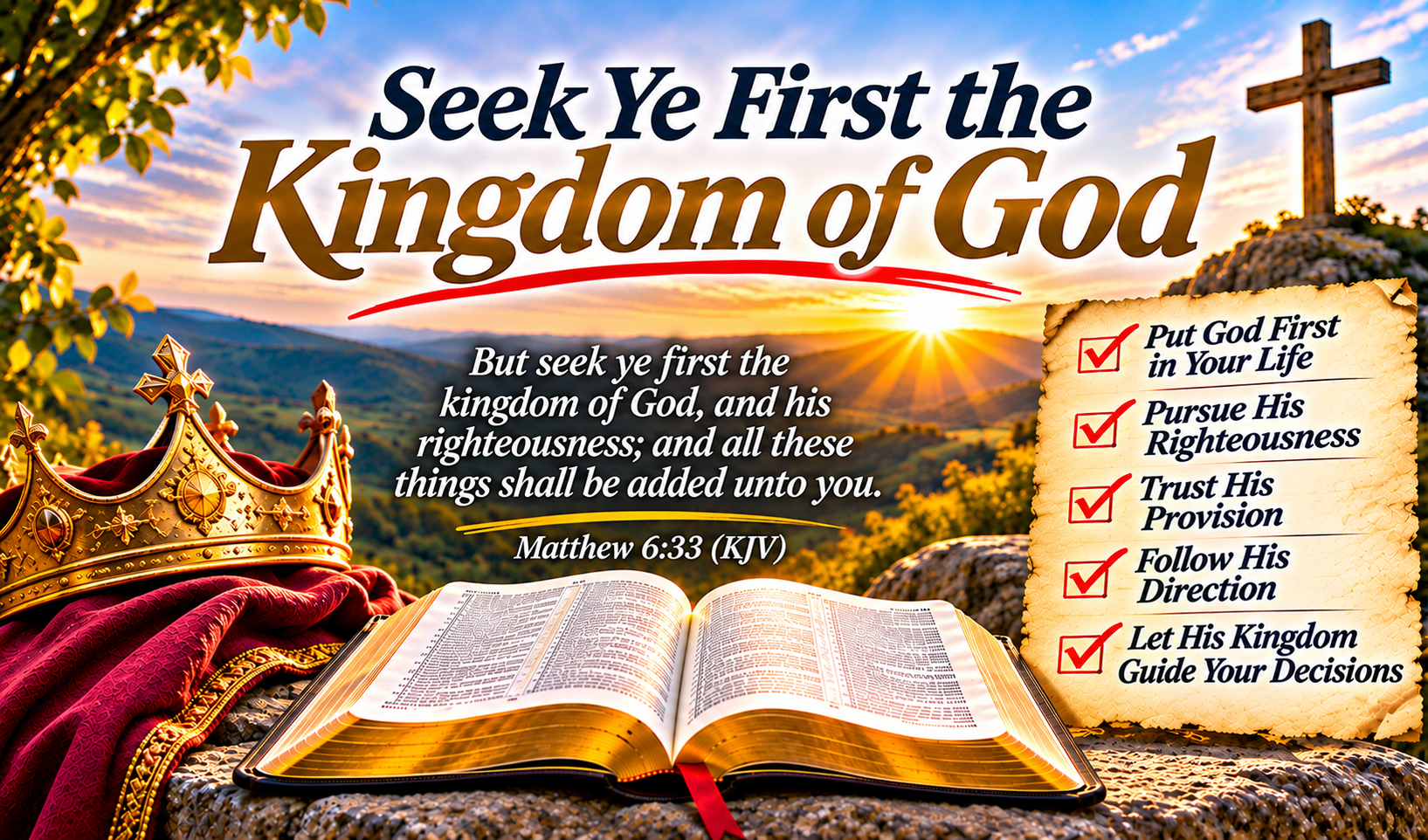
# Seek Ye First the Kingdom of God
Welcome: Putting God First in Every Area of Life
Every day we make decisions about what deserves our time, attention, energy, and resources. We think about our families, jobs, finances, responsibilities, and plans for the future. These things are important, and God understands that we have everyday needs. But in the middle of life's demands, it is easy to allow other priorities to take the place that belongs to Him.
Jesus gave His followers a very important instruction concerning the order of their lives. He taught them not to become consumed with worry about what they would eat, drink, or wear. Instead, He directed their attention toward something greater: seeking God's kingdom and His righteousness first.
Perhaps you have found yourself spending more time worrying about your circumstances than pursuing your relationship with God. Maybe you have been so busy trying to make things work that your time with Him has become an afterthought.
This lesson will help you understand what Jesus meant when He said to seek first the kingdom of God, why it must become our highest priority, and how we can put this teaching into practice in our everyday lives.
Seeking God's kingdom first is not simply about attending church or becoming involved in religious activities. It is about allowing God to be the center of our lives and permitting His Word to influence everything we do.
Primary Scripture: Seek First the Kingdom
“But seek ye first the kingdom of God, and his righteousness; and all these things shall be added unto you.”
These words were spoken by Jesus during His Sermon on the Mount. He was teaching His disciples about the dangers of worry and the importance of trusting their heavenly Father.
The word *seek* means more than occasionally looking for something. It carries the idea of pursuing, desiring, and making something a priority.
Jesus was telling His followers that their first concern should not be the things of this world, but the things of God.
Notice that He says to seek both the kingdom of God and His righteousness.
Seeking God's kingdom means desiring His rule, His purposes, and His will to be established in our lives. It means recognizing that God is the rightful authority over every area of our existence.
Seeking His righteousness means desiring to live according to His standards rather than simply following the values and expectations of the world around us.
This Scripture does not mean that we should neglect our responsibilities or stop working to provide for our families. It means that our responsibilities must never become more important than our relationship with God.
Jesus gives us a different order of priorities. Instead of allowing our needs to control our lives, we are to place God first and trust Him to care for us.
When God becomes our first priority, everything else begins to find its proper place.
Understanding What the Kingdom of God Really Means
“For the kingdom of God is not meat and drink; but righteousness, and peace, and joy in the Holy Ghost.”
When Jesus spoke about the kingdom of God, He was not simply referring to a physical location or a future destination in heaven.
The kingdom of God speaks of God's rule and authority. It is where His will is recognized, His authority is honored, and His purposes are carried out.
When we receive Jesus Christ as Lord, we enter into a relationship with God and become part of His kingdom. We are no longer called to live according to the world's standards. We are called to live under the authority of our heavenly King.
Romans 14:17 reminds us that the kingdom is characterized by righteousness, peace, and joy in the Holy Ghost.
**Righteousness:** Our lives should reflect God's character and standards. We are to pursue what is right, honest, pure, and pleasing to Him.
**Peace:** God's kingdom brings us into a relationship with Him through Jesus Christ. We can experience His peace even when circumstances around us are difficult.
**Joy:** Our joy does not have to depend upon everything going our way. Through the Holy Spirit, we can experience a joy that is rooted in our relationship with God.
Seeking the kingdom means allowing these truths to influence our decisions, relationships, attitudes, and daily conduct.
It is not enough to say that God is first if our choices consistently demonstrate otherwise. Our priorities become visible through the way we live.
Why Jesus Told Us Not to Worry
In Matthew 6:25-32, Jesus addressed one of the most common concerns people experience: worrying about everyday needs.
He spoke about food, drink, clothing, and the necessities of life. These were genuine concerns for the people listening to Him, just as they are for us today.
Jesus reminded His followers that their heavenly Father already knew what they needed.
“Behold the fowls of the air: for they sow not, neither do they reap, nor gather into barns; yet your heavenly Father feedeth them. Are ye not much better than they?”
Jesus used the birds of the air to illustrate God's care for His creation.
If God provides for the birds, how much more can we trust Him to care for His children?
This does not mean we should sit back and expect everything to happen without effort. Birds still search for food, and people still have responsibilities. The lesson is that we should not allow anxiety to become the controlling force in our lives.
Worry often causes us to focus on what might happen instead of trusting the One who knows what will happen.
We can become so concerned about tomorrow that we fail to enjoy what God has given us today.
Jesus was teaching His followers to live with confidence in their Father's care rather than being consumed by fear about the future.
When we put God first, we can work diligently, make wise decisions, and fulfill our responsibilities without allowing worry to rule our hearts.
Seeking God's Kingdom Requires Surrender
One of the greatest challenges in putting God first is learning to surrender our own plans and desires to His will.
Many people want God's blessings, protection, and guidance, but struggle when His direction differs from what they originally wanted.
Yet seeking the kingdom means recognizing that God's wisdom is greater than ours.
“Trust in the LORD with all thine heart; and lean not unto thine own understanding.”
This Scripture reminds us that trusting God requires more than acknowledging that He exists. It means depending upon Him even when we do not understand everything He is doing.
Sometimes God directs us away from something we wanted. Sometimes He asks us to wait when we would rather move forward. At other times, He challenges us to make changes that require courage and obedience.
Surrender does not mean becoming passive or refusing to make decisions. It means placing our decisions under the authority of God's Word and seeking His wisdom before moving forward.
Consider Jesus in the Garden of Gethsemane. As He faced the suffering of the cross, He prayed:
“Nevertheless not my will, but thine, be done.”
Jesus demonstrated complete submission to the Father's will.
If we desire to seek God's kingdom first, we must develop that same willingness to place His will above our own preferences.
The question is not simply, "What do I want God to do for me?"
A better question is, "Lord, what do You want me to do?"
That is where a life of surrender begins.
Seeking God's Righteousness in Everyday Life
Jesus did not simply tell us to seek the kingdom. He specifically said to seek God's righteousness.
This is an important part of His teaching.
Seeking righteousness means desiring to live in a way that agrees with God's character and His Word.
It involves more than outward religious behavior. God is concerned with what is happening in our hearts as well as what people see in our actions.
For example, we may attend church regularly, know Scripture, and participate in ministry, but still struggle with bitterness, dishonesty, pride, or unforgiveness.
God wants our lives to reflect the truth we profess to believe.
Consider the following areas:
**Our relationships:** Are we treating others with love, patience, and respect? Are we willing to forgive when someone has hurt us?
**Our words:** Do our conversations reflect honesty, encouragement, and kindness, or do we regularly participate in gossip, criticism, and harmful speech?
**Our decisions:** Are we choosing what is right even when doing so is inconvenient or unpopular?
**Our private lives:** Are we living consistently with the biblical values we encourage others to follow?
Seeking righteousness is not an attempt to earn salvation through good behavior. We are saved by grace through faith in Jesus Christ. But the grace of God should produce a growing desire to live in a way that honors Him.
The more we understand God's Word, the more we should desire our lives to reflect His character.
The Importance of God's Word in Seeking His Kingdom
“Thy word is a lamp unto my feet, and a light unto my path.”
We cannot consistently pursue God's kingdom if we neglect the Word that reveals His will and teaches us His ways.
The Bible provides instruction, correction, wisdom, and encouragement for everyday living.
When we read Scripture, we learn what God values, what He expects from His people, and how He wants us to respond to the situations we encounter.
Without the guidance of Scripture, it becomes easy to substitute our own opinions or the world's values for God's truth.
This is why Bible study must become more than an occasional activity.
Make time to read God's Word. Think about what you are reading. Ask the Holy Spirit to help you understand it and show you how to apply it.
For example, when you read about forgiveness, consider whether there is someone you need to forgive. When you read about generosity, examine how you are using the resources God has entrusted to you. When you read about obedience, consider whether there is an instruction you have been avoiding.
The purpose of studying Scripture is not simply to gain information. It is to know God better and allow His truth to shape our lives.
As we become more familiar with His Word, we become better equipped to recognize what agrees with His kingdom and what does not.
Seeking the Kingdom Through Prayer
Prayer is another essential part of putting God first.
Prayer is not simply asking God to provide our needs or solve our problems. It is an opportunity to develop fellowship with our heavenly Father, express our gratitude, seek His wisdom, and bring our lives into agreement with His purposes.
Jesus demonstrated the importance of prayer throughout His earthly ministry.
He regularly withdrew from the crowds to spend time with the Father. If Jesus made prayer a priority, how much more should we recognize its importance in our own lives?
“But seek ye first the kingdom of God, and his righteousness; and all these things shall be added unto you.”
Prayer helps us keep our priorities in the proper order.
When we begin the day seeking God, we are reminded that we do not have to face life's challenges relying entirely upon ourselves.
We can ask Him for wisdom before making decisions, strength when facing difficulties, and guidance when we are uncertain about what to do.
Prayer also helps us develop an attitude of gratitude. Instead of constantly focusing on what we lack, we begin recognizing the many ways God has already provided for us.
Don't allow prayer to become something you do only when trouble arrives. Make it a regular part of your relationship with God.
The Kingdom Must Come First in Every Area of Life
Seeking God's kingdom first should influence every part of our lives, not just our religious activities.
God is not interested in being given a small portion of our lives while everything else operates independently of His authority.
He wants us to recognize His Lordship in our families, finances, relationships, work, decisions, and personal conduct.
**In our families:** We should seek to demonstrate love, patience, forgiveness, and godly leadership.
**In our finances:** We should practice honesty, generosity, stewardship, and contentment rather than allowing money to become our master.
**In our work:** We should demonstrate integrity, diligence, and responsibility, recognizing that our conduct reflects our faith.
**In our relationships:** We should treat people with compassion and seek opportunities to encourage, serve, and help others.
**In our personal decisions:** We should consider whether our choices agree with Scripture and bring honor to Jesus Christ.
Seeking God's kingdom first is not something we accomplish once and then forget. It is a daily commitment to allow Him to direct our lives.
There will be times when our priorities become misplaced. When that happens, we can recognize it, make the necessary adjustments, and return to putting Him first.
God is not asking us to live perfect lives through our own strength. He is calling us to walk with Him, depend upon His grace, and grow in obedience.
God's Promise to Provide
The final part of Matthew 6:33 contains an encouraging promise:
“And all these things shall be added unto you.”
Jesus was assuring His followers that their heavenly Father knew their needs and could be trusted to care for them.
This promise must be understood in the context of His teaching. Jesus was not promising that believers would receive every possession or financial desire they requested.
He was teaching that we do not need to live consumed by anxiety over life's necessities when we have a heavenly Father who knows what we need.
God's provision may come in different ways. He may provide through employment, opportunities, the generosity of others, wisdom in managing resources, or strength to endure a difficult season.
Sometimes His provision is not exactly what we expected, but we can continue trusting His wisdom.
Seeking God first does not guarantee a life without financial challenges, sickness, or disappointment. It gives us a foundation for facing those challenges without allowing them to replace our trust in Him.
We should never pursue God simply for what He can give us. We should pursue Him because He is worthy of our love, worship, and obedience.
The greatest blessing is not what we receive from His hand, but the relationship we have with Him through Jesus Christ.
Reflection Questions
1. What currently receives the greatest amount of your time, attention, and energy? Does it reflect the priority Jesus gave to seeking God's kingdom first?
2. Is there an area of your life where you have been relying more on your own understanding than seeking God's direction?
3. What practical change could you make this week to place God first in your family, finances, work, relationships, or daily decisions?
Closing Prayer
Heavenly Father, thank You for Your love, Your provision, and the privilege of being part of Your kingdom through Jesus Christ. Forgive me for the times I have allowed the demands of life, personal ambitions, and worries to take priority over my relationship with You. Teach me to seek Your kingdom and Your righteousness first in everything I do. Help me surrender my plans to Your will and trust Your wisdom even when I do not understand the path ahead. Holy Spirit, guide my decisions, renew my thinking through Your Word, and help me develop a heart that desires what pleases You. Let my family, relationships, work, finances, and daily choices reflect that Jesus Christ is Lord of my life. Thank You for knowing my needs and for Your faithfulness. In Jesus' precious name, Amen.
Everyday Application
- **1. Begin Each Day with God.**
- Before allowing the demands of the day to take over your attention, spend time with God. Read a portion of Scripture, pray, and ask the Holy Spirit to guide your decisions. You don't have to spend hours to begin developing this habit. Start with a consistent amount of time and allow your relationship with God to grow.
- **2. Examine Your Daily Priorities.**
- Take an honest look at how you spend your time, energy, and resources. Ask yourself whether your choices reflect the importance of your relationship with God. Identify one area that has been receiving too much attention and make a practical adjustment. This may mean reducing distractions, making time for your family, becoming more generous, or returning to a consistent Bible study routine.
- **3. Include God in Your Everyday Decisions.**
- Before making an important decision, ask whether it agrees with God's Word and reflects His righteousness. Pray for wisdom, consider the consequences, and seek godly counsel when appropriate. Make obedience more important than convenience and trust God with the results.
Closing Encouragement
Life will always present opportunities to become distracted, worried, and consumed with things that compete for our attention. There will be responsibilities to fulfill, decisions to make, and challenges to face. But never forget the instruction Jesus gave us: Seek first the kingdom of God and His righteousness. God is not asking you to ignore your responsibilities. He is asking you to put them in the proper order. When He becomes the center of your life, you begin to approach everything else with a different perspective. You can work without making your job your master. You can provide for your family without allowing worry to control you. You can make plans while remaining submitted to God's direction. Don't simply give God whatever time is left after everything else has been done. Give Him first place. Make His Word your guide, His presence your priority, and His will your desire. **When you seek God first, you are choosing the One who knows your needs, sees your future, and understands your life better than you ever could. Put Him first today, tomorrow, and every day that follows.**
Reader Comments
Please be kind, stay on topic, and protect other people's privacy. No harassment, advertising, or spam. Comments are reviewed before appearing. Community guidelines
No comments yet.